


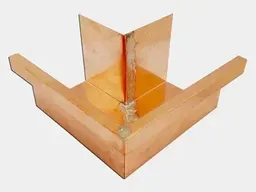
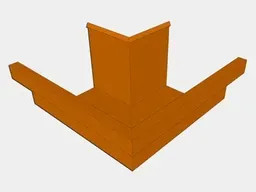
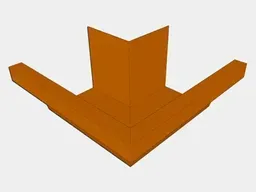
Half-Round Miters
Match the trough size and bead style. Reverse-bead and traditional Euro-bead corners are distinct products.
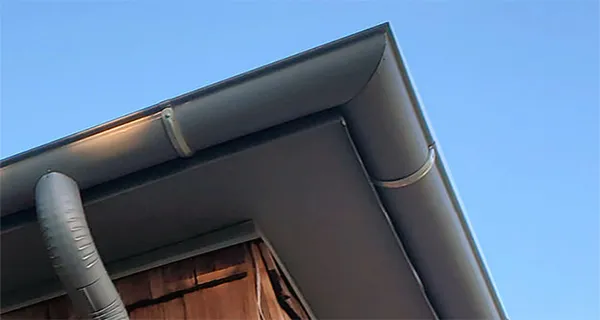
A gutter miter connects two gutter runs where the roofline changes direction. A correctly matched corner continues the trough around the building while providing connections that can be secured and sealed for the selected metal.
K&M Sheet Metal offers miters for K-style gutters, reverse-bead and Euro-bead half-round gutters, and several box gutter profiles. The selection includes one-piece stamped corners and fabricated assemblies, with custom profiles and angles available for review.
Match the trough size and bead style. Reverse-bead and traditional Euro-bead corners are distinct products.
Continue the ogee-shaped front around inside or outside corners, with angle and material options by product.
Match the complete cross-section, including bottom width, front shape and back height.
Half-round gutters can have different bead shapes even when their nominal widths match. Select a miter for the exact gutter profile; a reverse-bead fitting should not be substituted for a traditional Euro-bead fitting without confirming compatibility.
The Galvalume Plus reverse-bead inside-miter listing specifies 24-gauge material, 5-, 6-, 7- and 8-inch sizes, and 45-degree, 90-degree or custom-angle options. These corners are cut, tabbed and riveted, and require sealing during installation.
Other metals and finishes are offered on separate products. Confirm the selected product’s construction and joint requirements rather than applying the Galvalume specification to every half-round miter.
Selected copper miters are press-formed into a seamless corner body. For example, the Euro-bead outside miter is listed in 18-ounce copper for 5-, 6- and 7.6-inch gutters at 90 degrees. A separate 6-inch reverse-bead copper inside miter is also listed as a one-piece 90-degree fitting.
“Seamless” describes the miter body. The connections at its two ends still need appropriate attachment and sealing or soldering.
K-style miters continue the gutter’s shaped front, flat bottom and back through a corner. Match the gutter size, inside or outside orientation, angle and material. A nominal size alone does not confirm fit with an unfamiliar manufacturer’s gutter profile.
K&M’s K-Style miters include 5-, 6-, 7- and 8-inch sizes, 16- or 20-ounce copper, and 45-degree, 90-degree and custom angles. The fabricated corner is tabbed and soldered. That factory-assembled joint is separate from the field connections to the straight gutter runs.
Selected Galvalume and painted-metal miters use mechanical assembly. The K-style Galvalume Plus listing states that the miter is not supplied pre-sealed, so plan to seal the applicable corner and connecting seams during installation.
Box gutters are a family of profiles rather than one universal shape. K&M lists miters for A-style commercial, D-style residential and F-style industrial box gutters. Match the named style as well as its dimensions; a residential box miter should not be assumed to fit an industrial box gutter of the same nominal width. We offer our box gutters in 5-, 6-, 7-, 8- and 10-inch sizes depending on the selected materials. Check our product listings to verify sizes.
For Brownstone, custom ogee styles or other custom profiles, send a dimensioned cross-section and corner layout. Include the front and back heights, bottom width, bead or hem details, required angle and material. K&M can review whether the requested shape can be fabricated.
A preformed corner includes short gutter-shaped legs on both sides. This allows the adjoining gutter runs to terminate with straight cuts, subject to the fitting’s overlap detail.
The term describes the fitting’s construction: a half-round or K-style corner can also be a box miter.
A narrow formed strip covers the joint between gutter ends cut to form the corner. It occupies less of the visible gutter run but requires accurate angled cuts.
K&M does not offer strip miters, as we prefer full mitered ends. This provides a stronger connection to your gutter and ensures a longer-lasting, more durable joint.
An experienced installer can form the corner from the gutter runs themselves. This can reduce the number of visible connections but requires more precise cutting, fitting and joint preparation.
The best approach depends on the profile, material, appearance and installation requirements.
An outside miter is the projecting corner of a building and typically marks the beginning of a roofline hip. An inside miter follows a recessed corner, usually at the start of a roofline valley. Be sure to check the direction when assembling your order, and if you are unsure, refer to our product listing images to ensure you select the correct miter.
Our Standard product miter options include 90-degree and 45-degree corners, the latter commonly referred to as a bay miter. As bay-window rooflines can differ, it is important to get the actual degree rather than selecting a corner based solely on its nominal description. K&M can custom fabricate any degree miters as a custom order.
Send a top-view sketch for custom angles. Mark the building side, gutter front, direction of each run and the angle being measured. A corner’s included angle, change in direction and individual cut angles are different measurements. Use K&M’s angle-explanation drawings to confirm the ordering convention.
Common options include copper, 0.027-inch painted aluminum, 0.032-inch Kynar-finished aluminum, and selected 24-gauge steel or Galvalume products. Coated copper, zinc and other materials depend on the product or custom request. One-piece copper miters may use a different copper weight from fabricated models.
Match the base metal and finish specification, not just the color name. A copper-colored painted miter is not copper metal. Compare samples when coordinating with an existing gutter because weathering and different coating systems can affect the match.
Stamped, riveted and soldered construction have different installation requirements. A tabbed or riveted fitting is not necessarily sealed, and a soldered factory corner does not complete its connections to the gutter runs.
Dry-fit the miter before cutting and fastening the adjoining runs. Support the gutter near the corner according to the hanger and project requirements. Use compatible sealing materials and check the completed connections for leaks.
For a custom quote, include the drawing, material and finish, quantities, delivery location and requested schedule. Confirm preparation time separately from shipping transit time.
Commercial Box Gutter Miters
PDF –
Commercial Box Gutter – Inside box miter 45° angle explanation
PDF –
Commercial Box Gutter – Inside box miter 90° angle explanation
PDF –
Commercial Box Gutter – Outside box miter 45° angle explanation
PDF –
Commercial Box Gutter – Outside box miter 90° angle explanation
Residential Box Gutter Miters
PDF –
Residential Box Gutter – Inside box miter 45° angle explanation
PDF –
Residential Box Gutter – Inside box miter 90° angle explanation
PDF –
Residential Box Gutter – Outside box miter 45° angle explanation
PDF –
Residential Box Gutter – Outside box miter 90° angle explanation
Industrial Box Gutter Miters
PDF –
Industrial Box Gutter – Inside box miter 45° angle explanation
PDF –
Industrial Box Gutter – Inside box miter 90° angle explanation
PDF –
Industrial Box Gutter – Outside box miter 45° angle explanation
PDF –
Industrial Box Gutter – Outside box miter 90° angle explanation
Half Round Gutter Miters
PDF –
Half Round Reverse Bead Gutter – Inside box miter 45° angle explanation
PDF –
Half Round Reverse Bead Gutter – Inside box miter 90° angle explanation
PDF –
Half Round Reverse Bead Gutter – Outside box miter 45° angle explanation
PDF –
Half Round Reverse Bead Gutter – Outside box miter 90° angle explanation
K-Style Gutter Miters
PDF –
K-Style Gutter – Inside box miter 45° angle explanation
PDF –
K-Style Gutter – Inside box miter 90° angle explanation
PDF –
K-Style Gutter – Outside box miter 45° angle explanation
PDF –
K-Style Gutter – Outside box miter 90° angle explanation

Black

Dark bronze

Musket Brown

Royal brown

Almond

Linen

Low Gloss (30°) White

High Gloss (80°) White
Special Order colors require a minimum purchase of 325 lbs. coil.

London brown

Evergreen

Russet red
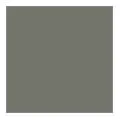
Charcoal grey
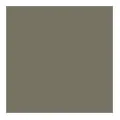
Terra bronze
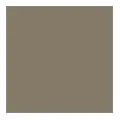
Montana suede
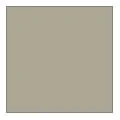
Jefferson tan

Harbor grey
Everest

Scottish thistle
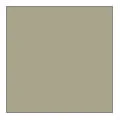
Pebblestone

Victorian grey
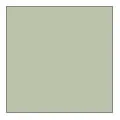
Tuscan olive

Wicker
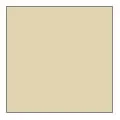
Sandstone
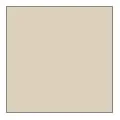
Desert sand

Classic cream
Cameo

White
Aluminum material is supplied by
Mastic.
All colors are available in 0.027″ aluminum, in 11.75″ or 15″ coil.
Special Order colors require a purchase of a 325 lb. coil.
PDF – Mastic 0.027″ Aluminum Color Chart
Mastic does not offer a physical color chart or color chips.

Black

Matte Black
**24 Gauge Steel Only

Dark Bronze

Medium Bronze

Almond

Bone White
Copper Penny

Charcoal
Special Order colors require a minimum 2000 sqf. purchase for coil. Most colors have a 1 sheet minimum per order. Extra freight charges apply.

Patina Green

Teal

Hemlock Green

Forest Green

Hartford Green

Evergreen

Hunter Green

Arcadia Green

Military Blue

Berkshire Blue

Graphite

Interstate Blue

Slate Blue

Award Blue

Burnished Slate

Aged Bronze

Mansard Brown

Burgundy

Terra Cotta

Cardinal Red

Colonial Red

Midnight Bronze

Musket Gray
Sierra Tan
Sandstone

Slate Gray

Cityscape
Granite

Stone White
Anodic Clear
Silversmith
Silver
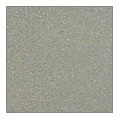
Champagne
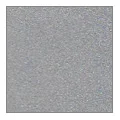
Zinc
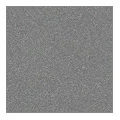
Weathered Zinc
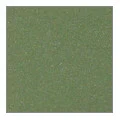
Aged Copper
Weathered Steel
Kynar coated material is supplied by
Petersen (Pac-Clad).
Colors are mostly available in 0.032″ and 0.040″ aluminum as well as 24 gauge galvalume (steel).
Some colors are available in 0.050″ and 0.063″ aluminum as well as 22 gauge galvalume.
Material available in sheet or coil format.
Pac Clad Sheets measure 48″ x 120″. No minimum purchase, but fees apply.
Standard coil widths are 20″ and 24″. Coils can be cut to any custom with from 48″ and under. Fees apply. 2000 sqf minimum purchase.
To learn more about Kynar® PVDF coated materials, please
click here.
PDF – PAC CLAD – Kynar Aluminum and Galvalume Steel Color Chart
Color Chart – To obtain a physical color chart or color chips, please visit this link.
Bonderized Steel
Copper
Freedom Gray
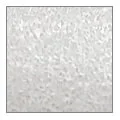
Galvalume Plus
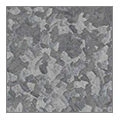
Galvanized Steel
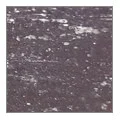
Lead Coated Copper
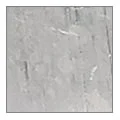
Mill Finish Aluminum
Stainless Steel
Bonderized Steel: Also known as Paint Grip. Offered in 26 gauge G90. 24 gauge available as special order.
Copper is commonly stocked in 3′ x 10′ and 4’x10′ sheets, 11.75″, 15″ 18″, 20″, 24″ (16 oz. or 20 oz.) and 36″ coil (16 oz.). 24 oz. and 32 oz. are available in 3′ x 10′ sheets. Our typical stock is 1/8 to 1/4 hard copper, supplied by Aurubis, Hussey and Revere.
We also stock 1″ x 3/16″ x 12′ bar stock. Other sizes as well as 48 oz. copper are available as special order items.
Freedom Gray is commonly stocked in 3′ x 10′ sheets of 16 oz. and 20 oz. Coils are available as a special order item with a 1000 lb. minimum. Freedom gray is a Tin / Zinc coated copper from Revere Copper.
Galvalume Plus is an Acrylic coated metal, also known as Acrylume. K&M utilizes Acrylume E Plus™ supplied by US Steel.
Galvanized Steel: Offered in 26 gauge G90. 24 gauge available as special order.
Lead Coated Copper is commonly stocked in 3′ x 10′ sheets of 16 oz. and 20 oz. Special order items include 3′ x 8′ sheets and 12″, 15″, 18″, 20″ and 24″ coil stock. A minimum of 1000 lbs. is required for a coil order.
Mill finish Aluminum is commonly stocked in 4′ x 10′ sheets of 0.032″ and 0.040″.
Stainless Steel in normally available in 24 and 26 gauge 4′ x 10′ sheets, 304 alloy 2B finish. Other thickness, and finishes such as #4, #8 and 2D available as special order items.
PDF –
Acrylume E Plus Coated Sheet Steel (Data Sheet)
PDF –
Aluminum – Alcoa (SDS)
PDF –
Copper (ASTM B370 Building Spec Sheet)
PDF –
Copper – Revere (Spec Sheet)
PDF –
Copper – Revere (MSDS)
PDF –
Freedom Gray Copper – Revere (Spec Sheet)
PDF –
Lead Coated Copper (ASTM B101 02 Building Spec Sheet)
PDF –
Stainless Steel – Outokumpu (Data Sheet)
PDF –
Expanded Aluminum Metal Flattened
PDF –
Expanded Copper Metal Flattened
Other colors, materials and thickness may be available upon request. Colors displayed for reference only.
Please click here for a full selection of colors and materials offered.
 FAQs
Compare corner types and choose a fitting that matches your gutter.
A gutter miter joins two gutter runs at a corner. It must match the gutter profile, size, material, angle and inside or outside orientation.
An inside miter fits a recessed building corner. An outside miter fits a projecting corner. Mark the building side and gutter front on a top-view sketch if the required orientation is unclear.
Common options are 90 degrees and 45 degrees, depending on the product. K&M can review custom angles. Confirm the measured layout and the product’s angle convention before ordering.
A bay miter commonly refers to a 45-degree corner fitting used on some bay-window rooflines. Not every bay has that angle. Measure the actual corner and compare it with the angle-explanation drawing.
No. A box miter is a preformed corner with short gutter-shaped legs on both sides. It can be made for K-style, half-round or other profiles. A box gutter miter specifically fits a box-shaped gutter profile.
A strip miter is a narrow formed piece covering the joint between gutter ends cut to make the corner. It has a smaller visible footprint than a full box miter but requires accurate angled cuts.
An experienced installer can cut and join the gutter runs to form a field-mitered corner. This requires accurate layout, fitting and joint preparation. Consider the metal, profile and desired appearance when choosing between a preformed fitting and a field-made corner.
Do not assume so. The bead shape is part of the fitting. Select the miter identified for the actual half-round gutter profile and size, and confirm compatibility when matching another manufacturer’s gutter.
It describes a one-piece, press-formed corner body. The connections between that body and the straight gutter runs still require appropriate fastening and sealing or soldering.
No. Construction varies by product. Some fabricated copper miters are soldered at the factory, while selected Galvalume and steel listings require sealing during installation. The field connections to the gutter runs must also be completed.
Tabs and rivets are used to assemble certain fabricated corners, including custom profiles and angles. They serve a different construction method from one-piece stamping. Mechanical assembly alone does not establish that the fitting is watertight.
Not necessarily. Match the complete cross-section, including beads, hems and front and back heights. Different box profiles or half-round bead styles may share a nominal width without fitting the same miter.
Leg lengths vary with the profile, angle and construction. Check the selected drawing or request dimensions before cutting the adjoining runs. Include the required connection overlap in the layout rather than relying on a universal length.
Follow the selected product’s connection detail. Aluminum and coated steel assemblies commonly use compatible fasteners and gutter-joint sealant. K&M recommends soldered copper connections. Choose solder, flux and preparation methods for the exact metal and coating; do not treat fastening alone as a watertight seal.
Provide clear photographs, a measured profile and any original material or color specification. Compare a current sample where available. Weathering, different coatings and profile variations mean an exact match should not be assumed.
Yes. Send a dimensioned cross-section and top-view corner sketch showing the building side, gutter front and measured angle. Include material, thickness, finish, required leg lengths and quantities so fabrication options can be reviewed.
Not always. Check the existing joint, gutter support, debris and drainage layout before choosing a repair. A replacement fitting does not correct inadequate support or a blockage elsewhere in the system.
No. The range includes standard designs and fabricated products. Confirm availability and preparation time for the selected profile, size, angle and material, especially when ordering for a deadline. Shipping transit time is separate.